The activity or profession of producing advertisements for commercial products or services.
"an advertising agency".
Example: The judge ruled that they had 'exploited children' with their ADVERTISING, produced 'misleading' ADVERTISING, been 'culpably responsible' for cruelty to animals, been 'antipathetic' to unionisation and paid their workers low wages.
en: Publicidad
Application
noun
A formal request to be considered for a position or to be allowed to do or have something, submitted to an authority, institution, or organization.
"an application for leave".
Example: Ecological APPLICATION 9 (3): 864-879 Valverde, T. and Silvertown, J. (1997) canopy closure rate and forest structure.
en: Solicitud
Benchmarking
verb
Evaluate (something) by comparison with a standard.
"we are benchmarking our performance against external criteria".
Example: These similarities tell that Greenwich may be a good tourist destination so that Liverpool can produce strategic plans on the basis of its success and failure.
en: Evaluación comparativa
Business
noun
A business is defined as an organization or enterprising entity engaged in commercial, industrial, or professional activities. Businesses can be for-profit entities or non-profit organizations. Business types range from limited liability companies, sole proprietorships, corporations, and partnerships.
Example: Within the farming BUSINESS there are many stakeholders, the main ones of which are listed below: - Customers - These are people who are affected by the outcome of the BUSINESS and who can influence it, but are not directly involved with doing any of the work on a day to day basis.
en: Negocio
Client
noun
A person or organization using the services of a lawyer or other professional person or company.
"insurance tailor-made to a client's specific requirements".
Example: In summary, Fujitsu's updated appreciation of buyer behaviour has led to a more consultative sales approach to ensure a full understanding of the customer's business and issues, and a more collaborative approach to solving these problems, focussing on CLIENT led development. This has clearly been a success for the company, resulting in increased profitability, CLIENT base, repeat business, customer satisfaction and employee morale.
en: Cliente
Company
noun
The fact or condition of being with another or others, especially in a way that provides friendship and enjoyment.
Example: Reputation does allot for any COMPANY and takes time to build.
en: Empresa
Demand
noun
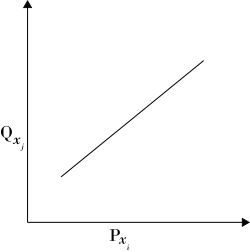
Demand is an economic principle referring to a consumer's desire to purchase goods and services and willingness to pay a price .
Example: The Milk Market DEMAND for goat and sheep milk has grown rapidly in the past thirty years and growth looks set to continue in the future. Tesco's reported a 28% increase in DEMAND for goat liquid milk in the past year alone (The Telegraph December 2005).
en: Demanda
Feature
noun
A distinctive attribute or aspect of something.
Example: The single entrance which has been proposed as a defensive FEATURE.
en: Característica
High price
adjective
Costing a great deal; expensive.
Example: If it is high, they will set their prices high to compensate for the HIGH PRICE of inputs (e.g. raw materials).
en: Precio alto
Items
noun
An individual article or unit, especially one that is part of a list, collection, or set.
Example: The specialists cataloguing the goods noted that practical and recreational ITEMS (shoes and gaming dice) were also buried with the woman.
en: Elementos
Life cycle
noun
A life cycle is a course of events that brings a new product into existence and follows its growth into a mature product and eventual critical mass and decline. The most common steps in the life cycle of a product include product development, market introduction, growth, maturity, and decline/stability.
Example: Product Range Strategy We aim to develop new products, eliminate unprofitable products and improve existing products to give better satisfaction to customers. 2 frameworks that aid this process are the product market matrix and product LIFE CYCLE (PLC).
en: Ciclo vital
Market
noun
A market is defined as the sum total of all the buyers and sellers in the area or region under consideration. The area may be the earth, or countries, regions, states, or cities. The value, cost and price of items traded are as per forces of supply and demand in a market.
Example: As a farm manager, my business not only competes with the national MARKET, but also within the global MARKET. There may be occurrences abroad that can affect the UK MARKET.
en: Mercado
Marketing
noun
Marketing is the activity, a set of institutions and processes for creating, communicating, delivering, and exchanging offers that have value for consumers, customers, partners, and society at large".
Example: Functional Level Strategy Formulation MARKETING - The farm will need to advertise the newly renovated stables in suitable locations e.g. tack shop, feed merchant.
en: Comercialización
Packaginng
noun
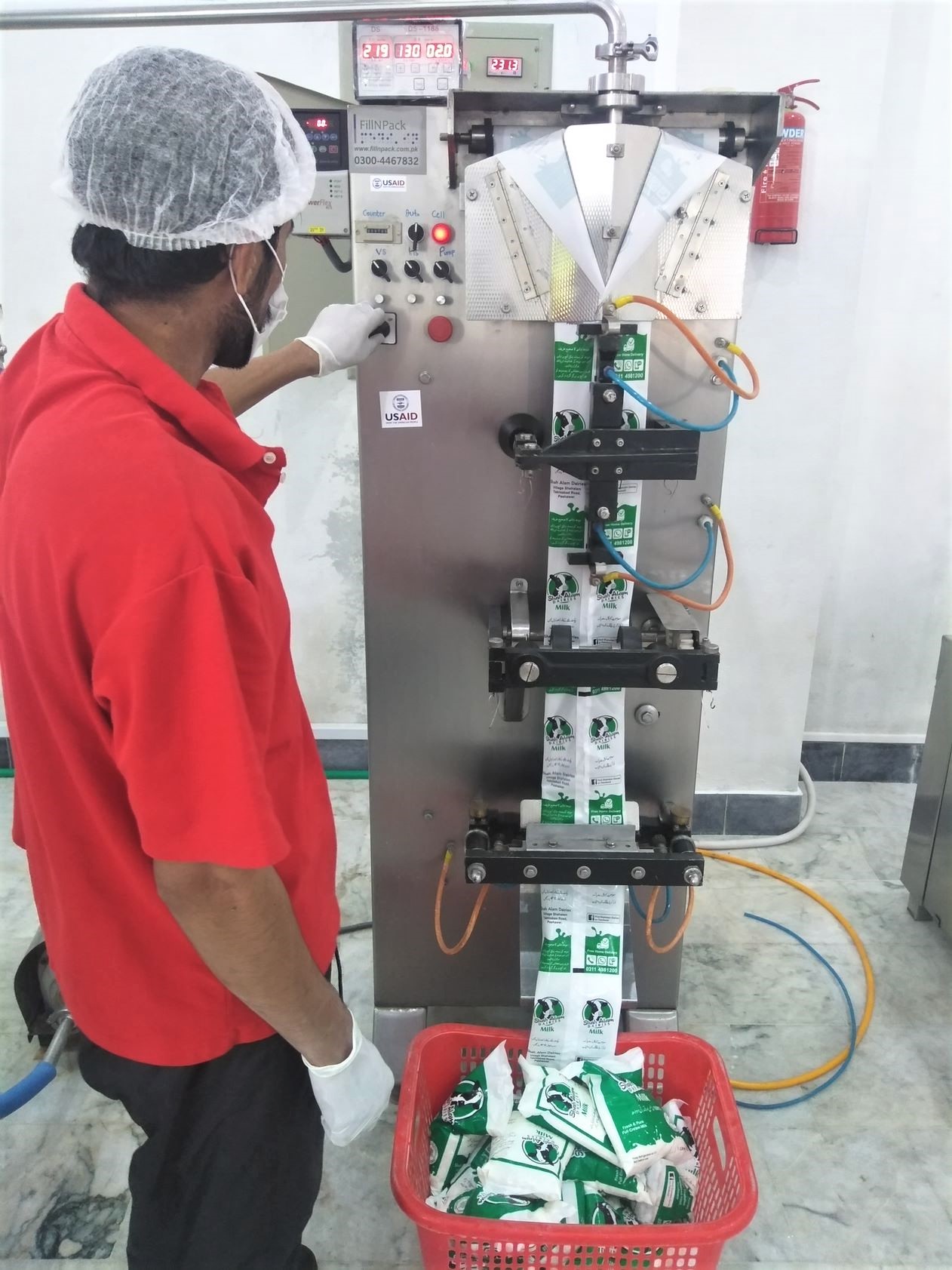
The wrapping material around a consumer item that serves to contain, identify, describe, protect, display, promote and otherwise make the product marketable and keep it clean. Packaging is more than just your product's pretty face.
Example: Cargo handling: facilitates the counting, distribution and transportation of packages.
en: embalaje
Planning
noun
Planning is the process of thinking about and organizing the activities required to achieve a desired goal. ... Planning is also a management process, concerned with defining goals for a company's future direction and determining the missions and resources to achieve those targets.
Example: They have better PLANNING and are easier to carry out the schemes which cope with the P-A problem.
en: Planificación
Price
noun
Price, the amount of money that has to be paid to acquire a given product. Insofar as the amount people are prepared to pay for a product represents its value, price is also a measure of value. ... They also act as indicators of the strength of demand for different products and enable producers to respond accordingly.
Example: Interestingly the PRICE changes of eggs in supermarkets is only slight between eggs from different production systems with organic eggs varying significantly in PRICE.
en: Precio
Product
noun
A product can be classified as tangible or intangible. A tangible product is a physical object that can be perceived by touch such as a building, vehicle, or gadget. Most goods are tangible products.
Example: Business Level Strategy Formulation Differentiation of PRODUCT - I am researching organic farming, which if suitable for the farm would differentiate my PRODUCT from that of many other farms, as it would form part of a niche market, making it more valuable.
en: Producto
Store
noun
An establishment in which any type of consumer product is sold.
Example: Much of this depends on STORE location, layout, image and ambience. 'Cutting costs doesn't have to mean cutting corners when it comes to STORE design' according to the team at Tesco (Anon retail property website). Tesco believes that the needs of its customers are far more important than awards for STORE design. However, it recognises the essential factors of a successful STORE as simple, easy to navigate, clean and uncluttered.
en: Tienda
Supply
noun
Supply is a fundamental economic concept that describes the total amount of a specific good or service that is available to consumers. Supply can relate to the amount available at a specific price or the amount available across a range of prices if displayed on a graph.
Example: The introduction of a locally distributed seed programme to SUPPLY affordable high quality seed to growers, which would, in turn, if successful, be self-sustaining.
en: Oferta
Tecnology
noun
Technology, the application of scientific knowledge to the practical aims of human life or, as it is sometimes phrased, to the change and manipulation of the human environment.
Example: The creation of robots for the automation of repetitive tasks or animal cloning.